
September 4th, 2026
Buy
Guide
Market
Homes for Sale in Japan: What You Can Actually Buy in 2026
Homes for Sale in Japan: What You Can Actually Buy in 2026
Last reviewed 3 Sep 2026 · 29 min read
Most people start looking at homes for sale in Japan the same way. They open a listing site, sort by price, and find something that looks impossible: a house with a garden for less than a used car costs back home. Then they scroll up and find a two-bedroom apartment in central Tokyo asking more than a house in London.
Both are real. They are also both asking prices, and in Japan right now the gap between what sellers ask and what buyers actually pay is the widest it has been in years. That gap is the single most useful thing to understand before you spend another hour browsing.
This guide is about what is genuinely on the market at each price level, who can buy it, what it costs to complete the purchase, and what the property will be worth in fifteen years. We have written it for people who intend to own a home in Japan rather than collect screenshots of cheap ones. That includes foreign residents already here, families relocating, and buyers abroad who want a base in Japan.
We are not going to tell you Japan is a bargain. In some places it is, in some places it is one of the most expensive markets in the world, and the difference is not where you would guess.
Average sold price, used apartment, Greater Tokyo ¥52,670,000 Average asking price, used apartment on the market ¥68,660,000 Average sold price, used house, Greater Tokyo ¥39,330,000 Average age of an apartment when it sells 27.7 years Vacant homes nationwide 9,002,000 Can foreigners buy? Yes, with no visa or residency requirement Can foreigners borrow? Usually only with permanent residency Best for Buyers who plan to stay, or who want land in a growing city Not ideal for Anyone expecting the building itself to hold its value
Quick Answer: What Can You Actually Buy in Japan Right Now?
You can buy almost anything, and there is no legal barrier to a foreign national owning Japanese property outright. Ownership is freehold, permanent, and inheritable, and it does not depend on your visa.
What you can buy depends almost entirely on where. In July 2026, the average used apartment that actually changed hands in the twenty-three wards of Tokyo sold for ¥77,570,000 at an average size of 56 square meters and an average age of nearly 26 years, according to the monthly market report published by the East Japan Real Estate Information Network (PDF), the designated public body that operates Japan's property listing exchange. In Saitama Prefecture, an hour north, the same statistic was ¥29,930,000. In Chiba it was ¥29,470,000.
For houses, the pattern repeats. A used detached house in the twenty-three wards averaged ¥74,940,000 on 82 square meters of land. In Saitama it averaged ¥24,770,000 on 148 square meters. That is roughly a third of the price for nearly double the land.
At the bottom of the market are the vacant rural houses that dominate English-language coverage of Japanese property. They are real, they are cheap, and a large number of them cannot legally be rebuilt. We will come back to that.
The Gap Between the Asking Price and the Sold Price
This is the part almost nobody explains, and it changes how you should read every listing you look at.
Japan publishes two different numbers every month. One is the average price of properties newly listed for sale. The other is the average price of properties that actually completed a sale. In a normal market those two track each other. In 2026 they have come apart badly.
In July 2026, across Greater Tokyo, the average used apartment newly listed for sale was priced at ¥68,340,000, up 20.5 percent on the year and rising for the twenty-seventh month in a row. The average used apartment that actually sold went for ¥52,670,000, down 0.7 percent on the year and falling for the third month in a row. Properties sitting unsold on the market averaged ¥68,660,000, up 29 percent.
So sellers are asking around 30 percent more than buyers are paying, and the number of unsold listings has risen for five consecutive months to 47,151, while completed sales fell 8.6 percent.
What this means in practice: the asking prices you see on listing sites are a poor guide to value, and they are getting worse as a guide every month. Before you make an offer on anything, look up what comparable properties in that neighborhood actually sold for. Two free public tools give you this. The Real Estate Information Library run by the Ministry of Land, Infrastructure, Transport and Tourism publishes transaction prices, published land values and hazard data on one map. Reins Market Information publishes anonymized contract prices from the same exchange the agents use. Both are in Japanese, and both are worth the effort of a translation tool.
In our experience, buyers who check sold prices before viewing negotiate from a completely different position than buyers who anchor on the listing. When the spread is this wide, that difference is worth several million yen.
Where the Japanese Market Is in 2026
Two things are happening at once, and treating them as one market is how people get the picture wrong.
Land is rising steadily. In the land price survey published on 17 March 2026, covering 26,000 survey points as of 1 January, the national average rose for the fifth consecutive year across all use types. Residential land rose at the same rate as the previous year. This is a broad, unspectacular rise, not a bubble. For comparison, in the late-1980s bubble, residential land in Tokyo rose an average of 19.6 percent a year.
Apartments are a different story. The Ministry's real estate price index sets 2010 at 100. As of December 2025, the most recent month published, residential land nationwide sat at 119.8 and detached houses at 121.9. Condominiums sat at 225.1. The apartment market has more than doubled while houses and land moved about 20 percent.
One caveat on that index, and it is an odd one. The Ministry announced on 27 August 2026 that publication has been postponed because of a fault in the calculation program, and that every monthly release from January 2026 onward is delayed with no new date set. So Japan's flagship official price index has been dark for most of 2026. If you read a 2026 article citing "the government price index," check which month it actually covers. Ours covers December 2025 because that is the latest that exists.
Meanwhile the transaction data shows the top of the market cooling. Sales volumes in the twenty-three wards of Tokyo fell 17.2 percent year on year in July 2026, the seventh consecutive monthly decline, while volumes in western Tokyo and outer Kanagawa rose. Money is moving outward from the center, not into it.
What ¥10 Million Buys
At around ¥10,000,000, roughly the price of a new car in Tokyo, you are shopping in one of three places.
The first is rural Japan, and this is where the vacant houses live. A detached house on a decent plot in a village in Niigata, Tottori or rural Kyushu will frequently sit in this band. It will typically be forty to sixty years old, timber-framed, uninsulated, on a septic system, and heated by a single kerosene stove.
The second is small, old apartments in regional cities. A studio or one-bedroom in an older building in a smaller city, or in the outer suburbs of Greater Tokyo, appears at this level regularly.
The third is properties with a legal problem, and this is where the price is explained. The most common is that the plot fails the road frontage rule.
Under Article 43 of the Building Standards Act, a building site must front a road recognized under the Act for at least two meters. Kawasaki City's explanation of the requirement sets out the standard case and the exception route, which requires the consent of the local building review board. If a plot fails and cannot get the exception, the existing structure can be repaired but a new one cannot be built. In Japanese these are called saikenchiku fuka properties, non-rebuildable.
The practical effects stack up. Banks will not lend against them, because there is no reliable collateral value. Resale is very difficult, because your only buyers are cash buyers with the same problem. And the eventual demolition cost lands on you with nothing to build afterwards.
A cheap Japanese property is not usually cheap because Japan is cheap. It is cheap for a specific reason, and finding that reason before you commit is the whole job.
If you are seriously considering one of these, our guide to whether you should buy a Japanese akiya walks through the checks that separate a workable renovation project from a liability.
What ¥50 Million Buys
This is the real center of the Japanese market, and it is where most actual transactions happen.
At ¥50,000,000 you are close to the average sold price for a used apartment across Greater Tokyo. Depending on where you point it, that money buys very different things.
In the twenty-three wards of Tokyo it buys a two-bedroom apartment of around 55 to 60 square meters in an older building, or a smaller one-bedroom in a newer one. In western Tokyo, Saitama or Chiba it buys a family-sized three-bedroom apartment with room to spare, or a detached house with a garden. In Yokohama and Kawasaki it buys a comfortable apartment or a modest house.
Used detached houses are the better value at this level. The Greater Tokyo average sold price for a used house in July 2026 was ¥39,330,000, for a house of 103 square meters on 144 square meters of land. That is a genuine family home at well under the apartment average, because the market prices the building at close to nothing and the land at close to everything.
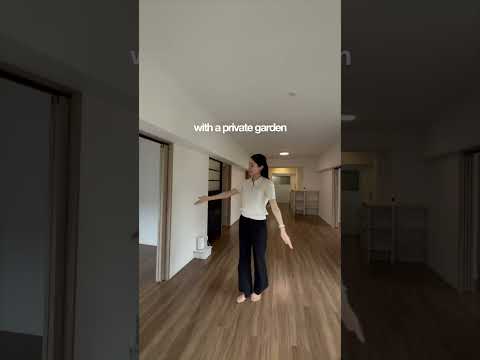
Here is a real example of what this band looks like in practice.
For a full breakdown of price by property type and region rather than by budget band, our guide to how much a house in Japan costs covers the underlying numbers in more depth than we can here.
What ¥200 Million Buys
Above roughly ¥150,000,000 you enter central Tokyo's prime market, and Japan stops being cheap by any international measure.
The Diet's own research bureau noted in its February 2026 report on real estate acquisition by foreign nationals (PDF) that the median price of a new apartment in the twenty-three wards passed ¥100,000,000 in the first half of 2025. That is the median, not the top.
At ¥200,000,000 you are buying a large new apartment in Minato, Chiyoda, Shibuya or Chuo, typically 90 to 130 square meters, in a building with concierge service, or a detached house on a proper plot in an established residential address such as Denenchofu or Shoto.
This band is also where the currency effect is largest. A price that looks unremarkable in yen has moved considerably in dollar or euro terms over the past four years, in both directions depending on when you converted. If you are funding from abroad, the exchange rate is not a detail, it is a material part of the purchase price.
New Build, Resale, House or Vacant Property: Four Different Markets
English-language coverage tends to treat Japanese property as one market. It is at least four, and they behave differently enough that advice from one is often actively wrong in another.
New build apartments are the tightest and most expensive segment. Construction costs and land acquisition costs have risen, supply has fallen, and dual-income households have pushed demand toward central locations. This is the segment producing the headline numbers.
Resale apartments and houses are where most transactions occur and where the value sits. The age profile is worth pausing on: in the second quarter of 2026, 42.3 percent of all used apartments sold across Greater Tokyo were more than thirty years old, according to the quarterly market report (PDF). The average age at sale was 27.7 years. Buying a thirty-year-old building in Japan is not an eccentric choice, it is the mainstream one.
Vacant houses are a fourth thing entirely, closer to a land purchase with a structure attached. The 2023 Housing and Land Survey counted 9,002,000 vacant homes nationwide, a vacancy rate of 13.8 percent and the highest on record. But read the breakdown before you get excited. Of those, 4,436,000 are rental units between tenants and 326,000 are already listed for sale. The category people mean when they say "abandoned houses" is 3,856,000. Of the vacant detached houses specifically, 80.9 percent fall into that residual category.
Those are also overwhelmingly not where you want to live. Tokyo's vacancy rate is 10.9 percent, but the residual category is only 2.6 percent. The nine million number is real. The nine million cheap houses in places you would choose is not.
Why Japanese Houses Lose Value and Land Does Not
This surprises almost every foreign buyer, and it should be the first thing you internalize.
In Japan, a residential building is treated as a depreciating asset with a finite service life. A timber house is generally assumed to have lost most of its accounting value within a few decades. A reinforced concrete apartment building holds value longer but still declines. The land underneath does not depreciate at all.
The market prices accordingly. This is why a fifty-year-old house in a good Tokyo neighborhood is often advertised as a land sale with the building thrown in, and why the demolition cost is sometimes deducted from the asking price.
The consequences run through everything else in this guide. It is why banks demand larger deposits on older buildings, because the collateral value of the structure is low. It is why the twenty-three wards apartment index has more than doubled since 2010 while the detached house index has risen about a fifth: apartment buyers are buying a share of extremely valuable central land, and house buyers in the suburbs are buying a wasting structure on cheaper land.

If you come from a market where a well-maintained older house commands a premium, this is the single hardest adjustment. It is not a flaw in the market, it is the market. Buy the land and the location; treat the building as a thirty-year consumable that you will maintain, renovate, and eventually replace.
Before you model any purchase, our guide to Japanese property depreciation sets out the statutory useful lives and how they feed into tax and valuation, which is the mechanism behind everything in this section.
The 1981 Line: Old Buildings and Your Mortgage
Japan revised its seismic design standards in 1981. Buildings designed to the pre-1981 standard are referred to as kyu-taishin, and buildings designed to the post-1981 standard as shin-taishin.
This date matters commercially as well as structurally. Lenders treat pre-1981 buildings more cautiously. Some tax reliefs for owner-occupiers are conditioned on seismic performance. And resale liquidity is measurably worse.
The date you need is the date the building permit was granted, not the completion date, so a building finished in 1982 or 1983 may still be designed to the old standard. This is exactly the kind of thing a building inspection catches and a listing does not. The Ministry publishes guidance for consumers on commissioning an inspection before purchase, which is worth doing on anything older than about fifteen years.

Can Foreigners Buy Property in Japan?
Yes. There is no visa requirement, no residency requirement, and no nationality restriction on buying and owning residential property or land in Japan.
The legal basis is straightforward. Under the Civil Code, foreign nationals enjoy the same private rights as Japanese nationals except where a law or treaty says otherwise. A 1925 statute called the Alien Land Law technically remains on the books, but the implementing ordinance was abolished in 1945 and has never been replaced, so it has no effect. Japan also made no reservation on national treatment for real estate acquisition when it joined the World Trade Organization's services agreement in 1995, which constrains how easily new discriminatory rules could be introduced now.
Three genuine exceptions exist:
- Agricultural land requires permission from the local agricultural committee, and permission depends on you having a credible farming plan. This catches people who buy a rural house with fields attached without realizing the fields are a separate legal category. A sale made without the required permission is void.
- Security zones. Under a 2021 law, areas within about one kilometer of defense facilities, certain airports, nuclear facilities and border islands are designated for monitoring. In the more sensitive subset, acquiring property of 200 square meters or more requires prior notification. This applies to Japanese and foreign buyers equally and does not prohibit the purchase.
- Financing, which is not a legal restriction at all, and which is where the real constraint sits.
The distinction worth holding onto is that ownership is open and lending is not. Almost every difficulty foreign buyers actually run into is a bank problem wearing a legal costume.
For the full picture, including the 2026 reporting rules, the documents a buyer abroad needs and every tax at purchase and on sale, our guide to whether foreigners can buy property in Japan goes step by step.
Getting a Mortgage as a Foreign Buyer
This is where most purchases succeed or fail.
The clearest published rule belongs to Flat 35, the long-term fixed-rate loan offered by private banks in partnership with the government-backed Japan Housing Finance Agency. Its eligibility conditions state plainly that applicants must be Japanese nationals, holders of permanent residence, or special permanent residents. The same page carries a warning that if it later emerges the borrower did not hold permanent residence, the entire loan becomes immediately repayable.
Other published Flat 35 conditions that catch people out:
- The property must be at least 30 square meters for an apartment or 50 square meters for a house. A large share of Tokyo's studio stock fails this outright.
- Total debt service, including car loans, student loans and credit card installments, must stay within 30 percent of annual income below ¥4,000,000, or 35 percent at or above it.
- The loan cannot be used for a property you intend to rent out. The agency verifies occupancy periodically and can demand full repayment.
- No personal guarantor is required.
Rates have moved sharply. As of September 2026 the most common Flat 35 rate for a 21 to 35 year term was 3.46 percent, in a range up to 5.69 percent, per the published rate table. Anyone modelling a Japanese purchase on the near-zero rates of five years ago is modelling a market that no longer exists.
Private banks set their own policies and do not publish them. What we see consistently in practice is that permanent residence is the main gate, that length of tax and pension history in Japan matters as much as income, that employment type matters more than nationality, and that outcomes vary between branches of the same bank. Buyers without permanent residence are routinely quoted deposits of 20 to 40 percent, sometimes with a Japanese spouse required as co-signer.
There is a language dimension that rarely appears in English guides. Loan documentation is in Japanese, most banks do not provide translations, and some require the borrower to demonstrate they can read the contract without one. Foreign residents who have lived in Japan for fifteen years and speak fluently still report being caught by this, because reading a mortgage deed is a different skill from daily conversation.
Buying from abroad without a Japanese loan is entirely possible and, procedurally, easier than people expect. Remote contract explanation over video call has been permitted since 2022 and electronic delivery of the statutory documents is now standard. What you will not get from abroad is a Japanese mortgage.
Closing Costs: What You Pay on Top of the Price
Budget between 6 and 9 percent of the purchase price on top of the price itself. The components are mostly fixed by law, so you can calculate them in advance.
Brokerage commission. The maximum is set by ministerial notification and applies per party. It is tiered: 5.5 percent on the first ¥2,000,000, 4.4 percent on the next ¥2,000,000, and 3.3 percent on everything above ¥4,000,000, all inclusive of consumption tax. The Ministry's consumer guidance on property transactions works the example: on a ¥10,000,000 property, the maximum from one party is ¥396,000. On a ¥50,000,000 property it comes to ¥1,716,000.
There is an important exception. Since 1 July 2024, on properties priced at ¥8,000,000 or below, an agent may charge up to ¥330,000 including tax from each party, which can exceed the standard formula. This was introduced deliberately to make cheap vacant houses worth an agent's time. If you are buying at the bottom of the market, expect the commission to be a much larger share of the price than the percentages suggest.
Registration and licence tax. Charged on the assessed value, not the sale price. Per the National Tax Agency's rate table, transfer of land by sale is 2 percent, reduced to 1.5 percent for registrations up to 31 March 2029. Transfer of a building by sale is 2 percent, reduced to 0.3 percent for an owner-occupied home until 31 March 2027, subject to a 50 square meter minimum floor area and registration within a year of acquisition. Mortgage registration is reduced to 0.1 percent on the same basis.
Stamp duty on the sale contract, on a fixed scale. Per the National Tax Agency's schedule, contracts between ¥10,000,000 and ¥50,000,000 attract ¥10,000; between ¥50,000,000 and ¥100,000,000, ¥30,000. Electronic contracts attract none at all, which is a small but real reason to sign digitally.
Judicial scrivener fees for handling the registration, typically ¥100,000 to ¥200,000.
Real estate acquisition tax, charged by the prefecture on the assessed value. This one is worth flagging separately because it does not arrive at closing. It arrives as a bill three to six months later, long after you have spent your reserves on furniture. Reduced rates and deductions apply to owner-occupied homes and residential land; the Tokyo Metropolitan Tax Bureau publishes the current treatment along with a calculator.
One trap specific to foreign buyers. If the seller is a non-resident of Japan or a foreign corporation, the buyer is required in certain cases to withhold income tax and the reconstruction surtax from the purchase price and pay it to the tax office. This obligation sits on you, the buyer, not the seller. The Ministry's consumer guidance linked above covers it. Raise it with your agent before contract, not after.
The Running Costs Nobody Puts in the Listing
For an apartment, the two monthly charges are management fees and the repair reserve fund, and the second one is where Japanese buyers focus their attention almost to the exclusion of everything else.
The reserve fund pays for major periodic works: exterior walls, roof waterproofing, plumbing risers, elevators. The Ministry's guideline on apartment repair reserve funds (PDF), revised in June 2024, publishes benchmark levels drawn from 366 real long-term repair plans. For a building under 20 storeys with a gross floor area between 5,000 and 10,000 square meters, the average works out at ¥252 per square meter of private floor area per month, with two-thirds of cases falling between ¥170 and ¥320. For buildings of 20 storeys and above, the average is ¥338 with a band of ¥240 to ¥410. Mechanical parking adds more; a three-tier pit system runs about ¥5,840 per space per month.
On a 65 square meter apartment in a mid-rise, that implies roughly ¥16,000 a month for the reserve alone, before management fees.
Now the part that makes this a buying issue rather than a budgeting issue. The guideline states directly that developers sometimes set the initial reserve contribution very low to make units easier to sell, and that plans relying on stepped future increases have produced real shortfalls when owners later failed to agree the increases. The 2024 revision added a specific rule to curb this: under a stepped plan, the opening contribution should be at least 0.6 times the level-equivalent rate and the final contribution no more than 1.1 times.
So the question to ask is not "what is the monthly fee." It is "is this fund on a level plan or a stepped one, what is the current balance, when is the next major works cycle, and has the owners' association ever failed to pass an increase." A low fee on an older building is a warning sign, not a saving.
For a house, there is no association and no fee, and there is also nobody scheduling your roof replacement. Budget for it yourself.
Both types carry annual fixed asset tax and city planning tax, billed by the municipality.
What Japanese Buyers Check That Foreign Buyers Miss
We read both the Japanese and the English-language conversation around buying in Japan before writing this, and the two do not overlap nearly as much as you would expect. Four things worry Japanese buyers consistently and barely register in English.
The repair reserve trajectory. Covered above. In Japanese buying forums this is close to the first question asked about any apartment. In English-language discussion it is usually treated as a flat monthly cost, if it is mentioned at all.
Whether the owners' association actually functions. Japanese buyers ask to see minutes, arrears rates and the long-term repair plan. The common English-language response to a dysfunctional association is to avoid apartments and buy a house instead, which is a reasonable answer to a question most people never ask.
Demolition cost and asbestos. This is close to a total blind spot in English. Japanese buyers of older houses price demolition as a line item, because they know they may pay it, and because asbestos in an older structure turns a routine demolition into a specialist job. English-language buyers of cheap houses discuss termites at length and demolition almost never.
The derelict property tax penalty. Residential land in Japan receives a large reduction in its fixed asset tax base. That reduction can be withdrawn. Under the vacant homes legislation, if a property is designated as a derelict property or a poorly-managed vacant property and the owner does not act on the municipality's recommendation, the residential land tax reduction is removed and the land tax rises sharply.
That last one deserves emphasis for anyone buying a second home or a rural property they will visit occasionally. If you buy a house in the countryside and leave it standing empty and unmaintained, you are exactly the owner this rule was written for. It is the highest-value thing in this section and it appears nowhere in the English-language conversation we surveyed.
There is one worry that does cross over well, and one that goes the other way. Non-rebuildable plots and the road frontage rule are discussed accurately by foreign residents already living in Japan, though not by the overseas audience. And foreign buyers care far more than Japanese buyers about insulation and thermal performance, which is a real difference in expectations rather than a mistake by either side. If you are coming from northern Europe or Canada, assume a Japanese house of any age is colder inside than you expect and budget for glazing and insulation as a first-year cost, not a nice-to-have.
Where Cheap Houses Go Wrong
Vacant house listings deserve their own honest section, because the gap between the genre and the reality is large.
The purchase price is the smallest number in the project. Foreign owners who have actually completed one consistently describe renovation costs at one to three times the purchase price, on houses that were described as habitable when bought. Insulation, glazing, plumbing, wiring and roof work compound quickly on a fifty-year-old timber structure.
Access is a constraint people discover after buying. A house that is legally rebuildable but sits at the end of a narrow steep lane still has to be reached by contractors, and quotes reflect that.
Community obligations are real and non-optional in practice. Rural neighborhood associations run rotas for clearing drainage channels, cutting roadside grass, circulating the neighborhood notice folder and maintaining the local shrine. Sellers in some areas state the expectation explicitly in the listing. None of this appears on a listing site as a cost, and all of it is a cost in time.
Resale is genuinely hard. A rural house you cannot resell is not an asset that happens to be illiquid, it is a permanent liability with a garden.
Where these purchases work, they work for people who already know the specific community, who have the skills or the budget to do the work properly, and who are buying a life rather than an investment. That is a real and defensible reason to buy. It is not the reason the videos suggest.
What Is Changing in 2026: Nationality Reporting and the Restriction Debate
If you are buying in Japan this year you should know what is being discussed, because the coverage is loud and the substance is narrower than the coverage suggests.
Since 2025 there has been active political debate about restricting property acquisition by foreign nationals, driven by rising urban prices and by security concerns about land near defense facilities and border islands. Several concrete administrative changes are now underway, set out in the Diet research bureau report linked earlier:
- From FY2026, applicants for transfer of property registration will be asked to declare their nationality. Importantly, nationality will be held as internal administrative information rather than becoming a publicly registered particular.
- From April 2026, nationality is being added to the notification requirements under the Forest Act, the National Land Use Planning Act and the security zone legislation.
- Reporting of property acquisition by non-residents under the foreign exchange rules is being widened to cover acquisitions for any purpose, not only investment purposes.
- The FY2026 tax reform outline removes the consumption tax exemption on brokerage commission where a non-resident transacts Japanese property. That is a direct cost increase for overseas buyers.
- The government has said it will assemble the framework for any security-based acquisition rules by summer 2026.
Two facts from that report are worth holding against the noise. First, the government's own study of registration data found that in the twenty-three wards of Tokyo, buyers with overseas addresses accounted for 3.5 percent of new apartment purchases in the first half of 2025. In the six central wards it was 7.5 percent. Second, on short-term resale within a year, the study found buyers with overseas addresses resold at a lower rate than domestic buyers, 7.0 percent against 9.4 percent. The minister responsible noted that the registry contains no nationality field, so the study cannot actually distinguish foreign nationals from Japanese nationals living abroad, which is precisely the gap the new reporting is meant to close.
Some local measures are also in motion. Chiyoda Ward asked developers in July 2025 to attach five-year resale restrictions to apartments in certain developments. Kyoto has legislated a tax on non-resident housing that begins in FY2029. Kobe is studying something similar. None of these target foreign buyers specifically; they target investment purchases and empty units.
The honest summary for a foreign resident planning to live in the home they buy: nothing currently proposed stops you buying, and the direction of travel is toward more reporting rather than prohibition. The direction for non-resident investment buyers is less comfortable, and the tax change lands in 2026.
Buying, Renting or Investing: Which One You Are Actually Doing
These get conflated constantly, and the right answer differs completely.
If you are buying a home to live in for ten years or more, the depreciation of the building matters less than the location of the land, and the calculation against rent is usually favorable in a growing city.
If you are buying to hold for three to five years, be careful. The transaction costs alone are 6 to 9 percent going in, capital gains tax on a sale within five years is charged at a materially higher rate than after five years, and the building depreciates throughout. Short holds in Japan need genuine price appreciation just to break even.
If you are buying to rent out, understand that you are excluded from the most accessible loan products, since Flat 35 explicitly prohibits investment use, and that yields in central Tokyo have compressed as prices rose.
If you are buying a second home you will visit occasionally, re-read the derelict property section above, and be realistic about maintenance from a distance.
Pros and Cons of Buying a Home in Japan
What genuinely works in Japan's favor:
- Freehold ownership with no nationality or visa restriction, which is not true of several comparable markets in Asia.
- Transaction data is public and free, so you can check what things actually sold for.
- Statutory caps on brokerage commission, so the agent's fee is predictable and negotiable downward but not upward.
- Very high build quality and seismic standards in anything built to the post-1981 code.
- Enormous supply outside the major metropolitan areas, at prices that have no equivalent in most developed countries.
What genuinely works against it:
- The building depreciates. Over thirty years you should expect to own land and a structure worth very little.
- Mortgage access for foreign buyers is limited, in most cases, to permanent residents.
- Interest rates have risen substantially and fixed-rate products are now above 3 percent.
- Documentation is in Japanese, and some lenders require you to read it unaided.
- The cheapest properties frequently carry legal defects that make them unfinanceable and unsellable.
- Asking prices are currently a poor guide to value, and the spread is widening.
Who Should Buy in Japan, and Who Should Not
Buy if: you have permanent residence or a Japanese spouse and stable employment history; you plan to stay more than a decade; you are buying in a city with population growth rather than decline; and you are comfortable owning an asset whose structure will lose value while its land holds.
Buy with caution if: you are funding entirely from abroad. It is legal and workable, but you will not get a Japanese mortgage, you carry currency risk on the whole purchase, and the 2026 tax change raises your costs.
Do not buy if: you are treating a cheap rural house as an investment, or a way to get a visa. Owning property in Japan grants no residence rights whatsoever, and this is the single most common misconception we encounter. A property purchase and a visa are entirely separate matters.
Also do not buy if your plan depends on the building appreciating. That is not how this market works, and no amount of renovation changes it.
Japan Compared to the Markets Foreign Buyers Weigh It Against
| Market | Foreign ownership | Financing for foreigners | Building value over time | Typical extra costs |
|---|---|---|---|---|
| Japan | Freehold, unrestricted | Generally requires permanent residence | Depreciates; land holds value | 6 to 9 percent |
| Singapore | Restricted; heavy stamp duty for foreigners | Available, with limits | Leasehold on much of the stock | Very high, driven by stamp duty |
| Thailand | Condominiums only, with quota; no land | Very limited | Depreciates | Moderate |
| Portugal | Unrestricted | Available to non-residents | Holds or appreciates | Moderate |
Japan's distinguishing feature in this group is the combination of completely open ownership with quite closed financing. In most of the markets people compare it to, one of those is the other way round.
Practical Advice from E-Housing
A few things we tell every client who asks about buying here.
Check sold prices before you fall in love with a listing. With asking prices running roughly 30 percent above completed sales, this is currently the highest-value hour you can spend.
Sort out financing before you view. Get a pre-screening from two or three banks. Outcomes vary between institutions and even between branches, and the answer determines your budget more than anything else.
Commission an inspection on anything over about fifteen years old. It is inexpensive relative to the purchase and it is the only way you will learn about the seismic design date, the roof, the plumbing risers and the foundation.
For an apartment, read the association documents before you offer. The long-term repair plan, the current reserve balance, the minutes and the arrears rate tell you more about the next twenty years of ownership than the interior photographs do.
For a house, confirm the road frontage before anything else. If the plot cannot be rebuilt on, everything downstream changes.
Budget the acquisition tax separately and forget about it for six months. Then it arrives.
If you want the process end to end rather than the market context, our guide to buying property in Japan covers the sequence from first viewing to registration, and our team is happy to walk through your specific situation before you start looking.
Final Verdict: Is Buying a Home in Japan Worth It?
For the right buyer, yes, and the right buyer is more specific than most articles admit.
Japan gives you something unusual: genuine freehold ownership, open to foreign nationals, in one of the safest and best-served urban environments in the world, at prices that outside the central wards remain reasonable by international standards. The land in growing cities has risen for five consecutive years and the mechanism behind that rise is demographic concentration, which is not about to reverse.
What Japan does not give you is a building that gains value. If your mental model of home ownership is that the house is the asset and time is on your side, that model does not transfer, and forcing it produces the two most common bad outcomes we see: overpaying for a new building in a shrinking area, and buying a cheap rural house whose real cost is the twenty years of ownership that follow.
The buyers who do well here decide first what they are buying. Land in a place that will still be busy in 2050, with a structure they will maintain and eventually replace. Once that is settled, everything else in this guide is arithmetic.
FAQ: Buying a Home in Japan
Can foreigners buy a house in Japan?
Yes. There is no nationality, visa or residency requirement for buying and owning residential property or land in Japan, and ownership is freehold and permanent. Agricultural land is the main exception and requires permission from the local agricultural committee.
Can an American buy a house in Japan?
Yes, on exactly the same terms as any other buyer. US citizens face no additional restriction on ownership. The practical constraint is financing rather than nationality, and US buyers should also check their own reporting obligations on foreign assets.
Can foreigners buy property in Japan in 2026?
Yes. No restriction on purchase has been enacted. From FY2026 buyers will be asked to declare nationality when registering a transfer, held as internal administrative information, and the government has said it will set out a framework for any security-related rules by summer 2026.
How much is a house in Japan?
The average used detached house sold across Greater Tokyo in July 2026 went for ¥39,330,000. In the twenty-three wards of Tokyo the average was ¥74,940,000, and in Saitama Prefecture ¥24,770,000. Rural houses regularly sell below ¥10,000,000.
Why are houses in Japan so cheap?
Outside the major cities, because the population is falling, there are more homes than households nationally, and buildings depreciate rather than appreciate. Inside the major cities they are not cheap at all. Individual very cheap listings often carry a specific legal defect such as failing the road frontage rule.
Can I get a mortgage in Japan as a foreigner?
Usually only with permanent residence. Flat 35, the government-backed fixed-rate product, requires Japanese nationality, permanent residence or special permanent resident status. Private banks vary, and buyers without permanent residence are commonly quoted deposits of 20 to 40 percent.
Do I need permanent residency to buy a house in Japan?
No, not to buy. You need it, in most cases, to borrow. Buyers paying cash face no residency requirement at all.
Does buying property in Japan get you a visa?
No. Property ownership confers no residence rights, no visa and no path to one. This is the most common misconception we encounter and it is worth being blunt about.
How much are closing costs when buying a home in Japan?
Budget 6 to 9 percent of the purchase price. That covers brokerage commission, registration and licence tax, stamp duty, judicial scrivener fees, and the real estate acquisition tax, which arrives from the prefecture three to six months after completion.
What is the average age of a Japanese apartment when it sells?
27.7 years across Greater Tokyo in July 2026. More than 42 percent of used apartments sold in the second quarter of 2026 were over thirty years old, so buying an older building is the mainstream choice rather than an unusual one.
Is buying a house in Japan a good investment?
It depends entirely on what you are buying. Land in a growing city has risen for five consecutive years. Buildings depreciate throughout. A short hold is difficult because transaction costs run 6 to 9 percent and capital gains within five years are taxed at a higher rate.
What is an akiya and should I buy one?
An akiya is a vacant house. Japan had 9,002,000 vacant homes in 2023, though only 3,856,000 fall into the abandoned category people usually mean. Renovation typically costs one to three times the purchase price, and many cheap plots cannot legally be rebuilt on.
What does saikenchiku fuka mean?
It means non-rebuildable. Under Article 43 of the Building Standards Act a site must front a recognized road for at least two meters. If it does not, the existing building can be repaired but not replaced. Banks will not lend against these plots and resale is very difficult.
What is the repair reserve fund and why does it matter?
It is the monthly contribution apartment owners pay toward major periodic works. The ministry benchmark for a mid-rise is about ¥252 per square meter per month. A low fee on an older building usually means the fund is underfunded and an increase is coming.
What happens if I leave a house in Japan empty?
If a municipality designates it a derelict or poorly-managed vacant property and you do not act on the recommendation, the residential land reduction on the fixed asset tax is withdrawn and the land tax rises sharply. This applies to second homes.
What is the difference between kyu-taishin and shin-taishin?
They refer to the seismic design standards before and after the 1981 revision. The relevant date is when the building permit was granted, not completion, so some buildings finished in 1982 or 1983 were still designed to the older standard.
Should I buy or rent in Japan?
Buying generally makes sense over a ten-year-plus horizon in a city with population growth. Over three to five years, transaction costs and building depreciation make it hard to come out ahead. Your visa status and financing access often decide the question before the arithmetic does.
At E-Housing, we work with foreigners, expat families, international students and working professionals across greater Tokyo every day, and buying is the part of that work where the gap between what people expect and what is true is widest.
What we can do specifically is show you what comparable properties actually sold for rather than what they are listed at, tell you before you view whether a given bank is likely to lend on a given building, and read the association documents on an apartment so you know what the next twenty years of ownership costs before you commit.
If you are starting to look at homes for sale in Japan and want a straight answer about what your situation can support, get in touch. We would rather tell you early that something will not work than let you find out at the loan stage.
Share article
Get In Touch
Let’s Connect! How Can We Assist?
E-Housing connects you with quality properties across Tokyo. Whether you’re renting, buying or selling, our experts are ready to help. Fill out the form below for a response within 24 hours.