
September 8th, 2026
Guide
Lifestyle
Article
Airbnb vs Hotel vs Monthly Rental in Japan: Which One Actually Fits Your Stay 2026
Airbnb vs Hotel vs Monthly Rental in Japan: Which One Actually Fits Your Stay
Last reviewed 1 Sep 2026 · 26 min read
Most articles that compare Airbnb and hotels in Japan are written by people who stayed four nights and had a nice time. That comparison is easy, and it is also the least useful version of the question, because the answer only gets interesting once your stay stretches past a week.
Japan is unusual here. Three different laws govern the three ways you can sleep in a Tokyo apartment for money, and each one draws a hard line somewhere. Hotels have no limit on how long you stay. Airbnb listings registered under Japan's home-sharing law can only legally operate 180 nights a year, and that quota is shared across every guest the host takes, not just you. Monthly rentals are not accommodation at all in the legal sense. They are leases, which means different paperwork, different money, and one specific problem that trips up foreign residents almost every time.
This guide is written for people booking a real stay, not a weekend. It covers what each option costs in Tokyo, where each one stops making sense, what happens to your booking at the 28-night and 30-night marks, and why a Japanese resident and a foreign visitor tend to describe the exact same Airbnb in completely different terms. If you are researching this because you are moving to Japan rather than visiting, skip ahead to the section on address registration. It is the part that costs people the most trouble and appears in almost no English-language coverage.
Options compared Hotel, Airbnb / minpaku, monthly rental, share house Governing laws Hotel Business Act, Housing Accommodation Business Act, National Strategic Special Zone Act, Act on Land and Building Leases Airbnb legal night cap 180 nights per property per year (new-law minpaku) Airbnb "monthly stay" threshold 28 consecutive nights Special zone minpaku minimum 2 nights, 3 days Typical Tokyo hotel night ¥12,000 to ¥30,000, illustrative Typical Tokyo monthly rental ¥140,000 to ¥250,000 per month, illustrative Best for stays under 10 nights Hotel Best for stays of 1 to 6 months Monthly rental Not ideal for Anyone who needs a registered address on day one
Quick Answer: Which One Should You Book?
Under ten nights, book a hotel. Japanese hotels are clean, punctual, centrally located, and they will hold your luggage before check-in and after check-out without being asked. At that length the price gap in favor of an apartment is real but small, and you spend it back on the inconvenience of a self check-in you have to find at 11pm in the rain.
Between ten and twenty-eight nights, Airbnb usually wins on price, and it wins by a lot if you want a kitchen and a washing machine. This is the band where the platform genuinely earns its place in Japan.
Past twenty-eight nights, the picture flips. A monthly rental, called a monthly mansion (マンスリーマンション) in Japan, is typically the cheapest option per night, comes furnished with utilities and internet already connected, and does not carry Airbnb's long-stay cancellation terms. For most people arriving in Japan for a job, a course, or an extended project, this is the correct answer and almost nobody tells them.
Past six months, stop booking accommodation and sign a real lease. Monthly rentals price in flexibility, and once you no longer need flexibility you are paying for nothing.
There is one situation that overrides all of the above. If you hold a mid- to long-term residence status and need to register an address with your ward office, most monthly rentals and every Airbnb will fail you. We cover that below.
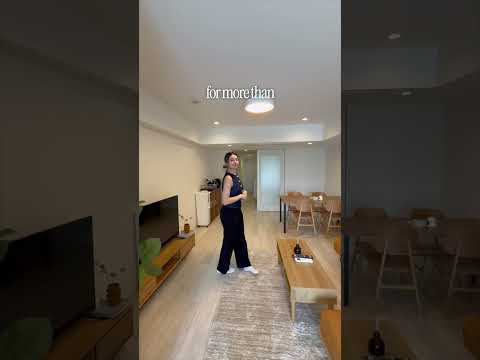
Our own take on why the hotel default stops making sense once a stay runs long.
The Three Options Are Governed by Three Different Laws
This sounds like a technicality and it is not. Every practical difference between these options comes out of which statute the operator is working under, so the law is worth five minutes.
Note that the official Japanese sources cited throughout this guide are published in Japanese only. We have translated the relevant parts, and linked the originals so you can check them.
Hotels and Ryokan: the Hotel Business Act
The Hotel Business Act (旅館業法) defines the lodging business as "letting people stay for a fee," where staying means "using a facility with bedding." Anything that fits that description needs a licence. The Japan Tourism Agency's summary of the Hotel Business Act sets out four licence categories, and the boundary between a lodging business and a rental business turns on two questions: whether the operator carries hygiene responsibility for the room, and whether the guest treats that room as their base of living.
The four categories are hotel and ryokan operations, which were merged into one class in June 2018, simple lodgings (簡易宿所) covering hostels and pensions, and boarding house operations (下宿営業), which is the odd one out: it covers lodging charged in units of one month or longer. That last category is a reminder that Japanese law has always understood long stays as a different animal.
For you as a guest, the thing that matters is what the Hotel Business Act does not say. There is no cap on operating days. A licensed hotel can sell you a room for 365 nights a year, and some Tokyo business hotels will happily sell you a monthly plan. Location is restricted instead, which is why hotels cluster around stations and minpaku turn up in residential blocks.
Airbnb and Minpaku: the 180-Night Ceiling
The Housing Accommodation Business Act (住宅宿泊事業法), commonly called the minpaku law, came into force on 15 June 2018 and is what most Airbnb listings in Japan operate under. The Japan Tourism Agency's explanation of the minpaku law sets the central rule: a registered property may not host guests for more than 180 nights in a year.
The counting method is more precise than people assume. The year runs from noon on 1 April to noon on 1 April the following year. A day runs noon to noon. The 180 nights attach to the property, not the host, so if a host sells the place mid-year the quota carries over to the new operator. Local ordinances can cut the allowance further, and Tokyo wards use that power.
Three players are regulated: the host who files the registration, the management company that runs an absentee host's property, and the booking intermediary. Airbnb sits in that third category and must register with the Commissioner of the Japan Tourism Agency.
Registered property numbers tell a story worth knowing before you book. As of 15 July 2026 there had been 65,837 minpaku registrations filed nationally, of which 23,767 had been withdrawn, leaving 42,070 properties actually active. More than a third of everyone who ever registered has quit. Alongside them sit 4,529 licensed management companies and just 66 registered booking intermediaries.
The activity figures are more revealing still. Across April and May 2026, Japan's registered minpaku hosted 624,088 guest-nights in total, which works out to 17.9 nights per property across a 61-day window. Tokyo carried 362,082 of those nights, far more than any other prefecture, at 22.8 nights per property. Foreign guests made up 62.4% of all minpaku guests nationally, with the United States, South Korea, Taiwan, China and Australia accounting for 47.0% between them.
The average legal minpaku, in other words, is nowhere near its 180-night ceiling. The cap is not what constrains most hosts. Demand is.
If you want the ward-by-ward detail on how Tokyo actually applies the minpaku law, including which wards restrict operating days by ordinance, our guide to Tokyo's minpaku rules in 2026 covers the local layer this section only summarizes.
Special Zone Minpaku: the Two-Night Minimum
There is a third regime, and it explains why some Tokyo listings refuse one-night bookings. Under the National Strategic Special Zone Act, certain municipalities can exempt qualifying accommodation from the Hotel Business Act entirely. The Cabinet Office's page on the special zone lodging exemption explains that these properties are let under a rental contract for a set minimum period, which in practice means two nights and three days.
There is no 180-night cap on special zone minpaku, which is why professional operators prefer them. Tokyo's Ota Ward was the first municipality in Japan to open the scheme, in January 2016.
The Cabinet Office's record of certified special zone properties (PDF) counted 9,426 certified facilities and 26,167 rooms nationally as of 31 May 2026. Ota Ward holds 472 facilities and 1,062 rooms. Osaka City holds 8,887 facilities, which is to say the overwhelming majority, and Osaka City stopped accepting new applications on 29 May 2026. Osaka Prefecture closed its own intake on the same day for all but four cities.
That is a system being wound back, not expanded. Ota Ward moved the same direction: after a sharp rise in resident complaints about noise, rubbish and misdelivered parcels, the ward revised its special zone minpaku guidelines with effect from 1 April 2026, tightening notification and floor area requirements.
The Cabinet Office also takes the trouble to correct a persistent misunderstanding on that page: the law requires the facility to be suited to foreign guests, but places no restriction whatsoever on who may book it. Japanese guests can and do stay in special zone minpaku.
Monthly Rentals: a Lease, Not a Stay
A monthly mansion is not lodging. It is a fixed-term building lease under Article 38 of the Act on Land and Building Leases, a contract form introduced in March 2000 that ends on its expiry date with no automatic renewal. Some very short lets are structured as temporary-use leases instead, which fall outside that Act altogether.
Where exactly is the line between a monthly rental and a lodging business? Not at thirty days, despite what you will read. The Japan Tourism Agency's official FAQ on the minpaku law (PDF) addresses monthly and weekly mansions directly and says the label is irrelevant. What matters are the two tests from a 1986 Ministry of Health and Welfare notice: whether the operator bears hygiene maintenance responsibility for the occupied room, and whether the occupant has their base of living there. Meet both as a lodging operator and you need a licence, whatever you call the product and however long the booking runs.
This is why a "30-day Airbnb" is not automatically a lease, and why a two-month monthly mansion where the operator cleans weekly and you keep your real address elsewhere can still be scrutinized.
What Each Option Costs in Tokyo
Here is the part everyone actually came for. Read the caveat under the table first, because it matters.
| Option | Typical Tokyo cost | Minimum stay | Utilities and internet | Deposit or key money |
|---|---|---|---|---|
| Business hotel | ¥12,000 to ¥18,000 per night | 1 night | Included | None |
| Mid-range hotel | ¥18,000 to ¥30,000 per night | 1 night | Included | None |
| Airbnb, short booking | ¥9,000 to ¥20,000 per night plus cleaning fee | 1 to 2 nights | Included | None |
| Airbnb, 28+ night booking | ¥6,000 to ¥12,000 per night after monthly discount | 28 nights for the discount | Included | None |
| Monthly rental, 1K | ¥140,000 to ¥180,000 per month | Usually 30 days | Usually included or capped | Cleaning fee, typically ¥20,000 to ¥40,000 |
| Monthly rental, central wards | ¥180,000 to ¥250,000 per month | Usually 30 days | Usually included or capped | Cleaning fee, typically ¥30,000 to ¥50,000 |
| Share house | ¥50,000 to ¥90,000 per month | 1 month | Usually included | Small deposit, often ¥20,000 to ¥30,000 |
| Standard 2-year lease | ¥100,000 to ¥180,000 per month | 2 years | Not included | 4 to 6 months' rent upfront |
These are illustrative market ranges observed across Tokyo in mid-2026, drawn from Japanese rental market data and advertised hotel rates. They are not drawn from an official statistic, because no government body publishes average nightly accommodation prices. Treat them as a planning starting point, not a quote.
One official number does anchor the hotel side. Nationally, hotel occupancy ran at 61.0% in May 2026 and 56.2% in June 2026, against 54.29 million guest-nights in May and 46.78 million in June. Both months were down year on year, with foreign guest-nights falling 9.0% in May and 11.9% in June. Rates have not softened to match, which tells you the constraint is supply rather than demand.
A Worked Example: 45 Nights in Tokyo
Numbers in isolation do not decide anything. Here is the same stay, priced three ways, for one person arriving in Tokyo for six and a half weeks.
Hotel. A business hotel at ¥15,000 per night runs ¥675,000 for 45 nights. Add Tokyo's accommodation tax at ¥100 per night in that band and you are at ¥679,500. No kitchen, so budget realistically for eating out twice a day. No washing machine, so add coin laundry or hotel laundry service. Housekeeping daily, luggage held for free, and you can extend or cut the stay with a few days' notice.
Airbnb. A one-bedroom at an effective ¥9,000 per night after the monthly discount is ¥405,000, plus a cleaning fee of roughly ¥10,000 and the guest service fee. Call it ¥440,000 all in. You get a kitchen and a washing machine, which cuts your food and laundry spend materially. You also inherit the long-term cancellation policy, which we come to next, and you cannot register the address.
Monthly rental. A 1K in a non-central ward at ¥150,000 per month for one and a half months is ¥225,000, plus a cleaning fee of around ¥30,000. Call it ¥255,000. Utilities and internet are typically bundled or capped. Furniture, bedding, kettle, microwave and washing machine are already there.
The monthly rental costs roughly 62% less than the hotel and roughly 42% less than the Airbnb, and it is the option nobody mentions in the comparison articles. That gap is the single most useful thing in this guide.
The 180-Night Cap and Why Your Booking Can Vanish
Here is a failure mode specific to Japan. A new-law minpaku host has 180 nights per year, per property. If they have a strong summer, they can run out. When they do, the legal move is to close the calendar. The less legal move, which the Japan Tourism Agency's own guidance is clearly written to discourage, is to keep operating without a licence.
The Agency's notice to guests about illegal minpaku lists what tends to go wrong in unlicensed properties: no hygiene procedures and inadequate cleaning, no operator able to respond to an emergency, neighbors who have not been told the property is a rental and who will complain to you rather than the host, fire alarms and extinguishers that may not exist, and keys that are not properly controlled.
That last one is not theoretical. A key box on a fence in a residential street is a key box anyone can watch you open.
Cancellations from a host who has run out of nights usually arrive weeks ahead, not the night before, and Airbnb will rebook you. But the rebooking happens at whatever the market rate is that week, and in Tokyo during cherry blossom season or Golden Week that is a different number entirely.
Hosts run into this constraint from the other side, and the arithmetic of it explains a lot about why Japanese listings behave the way they do. Our analysis of what 30,000 Airbnb hosts in Japan have learned about making money walks through the economics that shape the calendar you are trying to book into.
Where Airbnb Stops Making Sense
Airbnb's own rules draw the line at 28 nights, and the change is sharper than the marketing suggests.
Reservations of 27 nights or fewer run on standard cancellation policies, all of which include a 24-hour grace period after booking. Flexible gives you a full refund up to 24 hours before check-in. Moderate gives you five days. Firm gives you 30 days.
At 28 nights, a long-term policy takes over, and there are only two. Under the Firm long-term policy, you must cancel at least 30 days before check-in for a full refund. Cancel after that and the host is paid for every night you stayed plus 30 additional nights. Under the Strict long-term policy, a full refund requires cancelling within 48 hours of booking and at least 28 days before check-in. Miss either condition and the host is again paid for nights spent plus the next 30 nights.
Read that again if you are considering a three-month Airbnb. If you decide in week three that the apartment is wrong, the neighbourhood is wrong, or your job start date moved, walking away costs you a further month's rent. There is no viewing, no inspection period, and no way to test the place before the policy locks.
Monthly rentals are not automatically better here. Many charge the full period upfront and refund little or nothing on early departure, which Japanese consumer coverage of monthly mansions flags as one of the most common complaints. The difference is that a monthly rental contract states the terms as a contract, in writing, before you pay, and a reputable operator will let you extend month to month rather than committing to the whole block.
What Changes at 30 Days
Thirty days is where the folk wisdom lives, and it is roughly but not exactly right.
The practical convention in Japan is that a let of one month or longer sits outside the lodging regime and inside the rental regime. That is why monthly mansions exist as a distinct product, and why some minpaku operators run 180 nights of short lets and fill the rest of the year with monthly tenants.
But as the Japan Tourism Agency FAQ makes clear, the test is substance, not duration. A stay longer than thirty days can still be treated as a lodging business if the guest never establishes a base of living there and the operator retains hygiene responsibility. Conversely, a properly structured monthly lease is a lease from day one.
What this means for you, concretely:
- Nothing about a 30-night Airbnb booking makes it a lease. You are still a guest.
- A monthly rental contract will name a lease term and an end date. If the document you are sent looks like a booking confirmation rather than a contract, you are not signing a lease.
- Neither product gives you tenancy protection in the way a standard two-year lease does. Fixed-term leases end when they end.
Renting Monthly: How It Actually Works
Monthly mansions are a mature, competitive Japanese product with national operators, and they are barely visible in English. Here is the shape of the thing.
What a Monthly Rental Includes
The standard package is a furnished apartment with bed, bedding, table, chair, curtains, air conditioning, refrigerator, microwave, kettle, washing machine, cookware and cutlery. Water, gas, electricity and internet are usually bundled into the headline price or included up to a monthly cap, with anything over the cap billed on exit. You do not open utility accounts, which for a foreign arrival with no bank account and no phone number is worth more than it sounds.
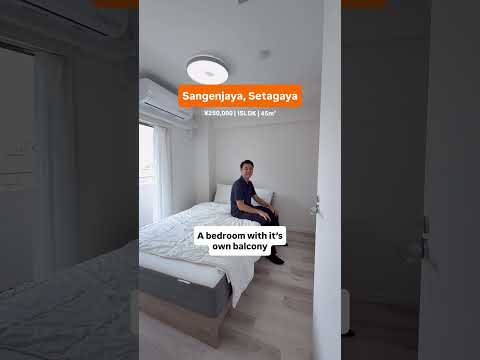
A furnished Tokyo unit of the kind this section describes, walked through end to end.
The pricing structure is typically a daily rate for rent plus a daily rate for utilities, multiplied by the number of days, plus a one-off cleaning fee and an insurance charge. The cleaning fee is charged whether or not you leave the place spotless. Japanese market data puts Tokyo 23-ward monthly rates broadly in the ¥140,000 to ¥180,000 range for a single-occupancy unit, rising to ¥180,000 to ¥250,000 in Minato, Shibuya and Shinjuku. Longer bookings usually attract a discount, and corporate rates sit below the advertised consumer rate.
Screening, Guarantors and Payment
This is where monthly rentals beat every other route into Japanese housing for a new arrival. Because rent is prepaid, most operators do not assess income or employment. There is usually no key money, no deposit in the traditional sense, and often no Japanese guarantor requirement.
What you will normally be asked for is a passport, a residence card if you have one, an emergency contact, and payment by card or bank transfer. Many operators will accept an application before you land, using a passport, a job offer letter, a letter of acceptance from a school, or a Certificate of Eligibility. Applications can often be completed entirely online.
Compare that to a standard lease, where you face a guarantor company screening, key money of one to two months' rent, a deposit of one to two months, an agency fee, and fire insurance, all payable before you get a key.
If you want the full picture of what a month-long rental in Tokyo actually costs and how the contract differs from a two-year lease, our guide to renting in Tokyo for a month breaks down the numbers and the paperwork in more detail than we can here.
The Address Problem Nobody Warns Foreign Residents About
This is the section that matters most and the one that English-language guides skip entirely.
If you hold a mid- to long-term residence status in Japan, you are legally required to report your residential address to your municipal office within 14 days of establishing it. The Immigration Services Agency's page on notifying your address after arrival sets this out under Article 19-7(1) of the Immigration Control Act. You present your residence card at the ward or city office counter, and completing the resident registration under the Basic Resident Registration Act counts as satisfying the immigration notification at the same time.
Almost nothing else in Japanese life works until that is done. Your national health insurance, your pension enrolment, your My Number card, most bank accounts and a great many phone contracts all depend on a registered address.
You cannot register an Airbnb as your address. And you very often cannot register a monthly rental either. Most monthly mansion operators explicitly prohibit resident registration in their contract terms, on the reasoning that the unit is a temporary base rather than a residence. Some will permit it for stays of a year or more. Many will not permit it at all.
This is a genuine trap. Someone arrives on a work visa, books two months in a monthly mansion to give themselves time to find a real apartment, and discovers in week three that they cannot enrol in health insurance, cannot finish onboarding at their employer, and are now past the 14-day window.
The workarounds are limited and you should establish which one applies before you book, not after:
- Ask the operator directly, in writing, whether resident registration is permitted at the specific unit. Do not accept a general answer about the company's policy.
- Some employers will allow registration at a company address or company housing during a transition. Ask HR before you arrive.
- Some share houses do permit registration, which is one of the underrated reasons to consider one.
- If none of the above works, prioritize signing a standard lease over finding the perfect neighbourhood. The registered address unblocks everything else.
The registration process itself is straightforward once you have an address that qualifies, and worth reading before you arrive. Our walkthrough of how to register or change your address in Japan covers the counter procedure, the documents and the moving-out notification.
Booking as a Foreign Resident vs Booking as a Tourist
The two situations are different enough that the same accommodation can be a good idea for one and a bad idea for the other.
A tourist wants location, price, and no friction. All three options serve that. A hotel wins on friction, Airbnb wins on space and self-catering, and for anything over a month a monthly rental wins on price by a wide margin.
A resident wants a registered address, a mailing address that works, utility accounts in their own name, a place to receive deliveries, and continuity. Only a standard lease delivers all of that. This is the honest answer, and it is why we treat monthly rentals as a bridge rather than a destination.
There is one document rule worth knowing whichever camp you are in. Under the minpaku law, hosts must keep a guest register recording every guest's name, address, occupation and dates of stay. For foreign guests who do not have an address in Japan, the register must also record nationality and passport number. So yes, a legal Japanese Airbnb will ask for your passport. That is not the host being nosy, it is a statutory duty, and a host who does not ask is a host you should look at more carefully.
The same law requires hosts to explain, in a foreign language where the guest is foreign, how the facilities work, how to get around, and who to call in a fire or a disaster.
What Japanese Residents Say That English Guides Do Not
This is where the two research trails diverge most sharply, and the gap is instructive.
English-language coverage of Airbnb in Japan is overwhelmingly framed as a consumer question: is it cheaper, is it nicer, is it more convenient. Japanese-language coverage is framed almost entirely as a neighbourhood and regulatory question, and the tone is markedly less friendly.
The Japanese complaints, consistently, are noise late at night, wheeled suitcases on quiet residential streets at 2am, rubbish put out on the wrong day in the wrong bag, guests photographing the entrances of ordinary homes, parcels misdelivered to residents, and strangers with key codes coming and going in a building where everyone else has lived for a decade. Ota Ward's response was to tighten its guidelines. Osaka's response was to stop accepting new special zone applications altogether. Tokyo's response, from April 2027, is to tax minpaku like hotels.
English coverage of monthly mansions sells them on convenience: no key money, no guarantor, move in tomorrow. Japanese coverage of the same product leads with the warnings: you usually cannot view the unit before booking, you pay the full period upfront, you cannot register your residence there, sound insulation is often poor, and turnover among your neighbors is constant, which makes ordinary disputes harder to resolve because nobody knows anybody.
Neither picture is wrong. They are answers to different questions. But if you only read the English version you will book a minpaku in a residential block, wonder why the neighbor looks at you the way she does, and never understand that you are the fourth group of strangers she has watched let themselves into that door this month.
The practical takeaway is simple and slightly unglamorous: in a residential building, behave like a resident. Learn the rubbish day. Take your shoes off in the entrance. Do not have a party. It costs you nothing and it is the difference between a stay that goes quietly and one that ends with a complaint.
Tokyo's Accommodation Tax Is Changing in April 2027
If you are planning a stay past March 2027, this affects your budget.
Tokyo currently charges an accommodation tax on hotel and ryokan stays only, on a flat two-band scale. The Tokyo Metropolitan Government's accommodation tax page for guests sets the current rates at ¥100 per person per night for rooms from ¥10,000 to under ¥15,000, and ¥200 per person per night at ¥15,000 and above. Anything under ¥10,000 is exempt.
From 1 April 2027 that changes in three ways at once. The flat bands become a straight 3% of the nightly rate per person. The exemption threshold rises from ¥10,000 to ¥13,000. And the tax base expands to include simple lodgings and both kinds of minpaku, new-law and special zone.
The Metropolitan Government's explanation of the reform says the assembly passed the amending ordinance on 27 March 2026 and the Minister for Internal Affairs and Communications consented on 30 June 2026. Tokyo estimates the reformed tax will raise around ¥19 billion a year, and expects roughly 30% of minpaku properties to fall into the taxable band.
Work the arithmetic on your own stay. On a ¥25,000 hotel night, the tax goes from ¥200 to ¥750. Over a 30-night stay that is a jump from ¥6,000 to ¥22,500. On a ¥12,000 minpaku night, currently untaxed and still under the new ¥13,000 threshold, nothing changes. The reform is aimed squarely at the upper end of the market.
How to Tell a Legal Listing from an Illegal One
The Japan Tourism Agency's advice is to book only through registered intermediaries, because registered platforms are required not to carry unlicensed properties. The Agency publishes a list of registered booking intermediaries and travel agents, which as of July 2026 ran to 66 entries. Airbnb is on it.
Beyond the platform, four checks take about a minute each:
- A registration or licence number should appear in the listing. New-law minpaku carry a registration number beginning with M, special zone properties carry a ward certification number, and licensed simple lodgings carry a Hotel Business Act permit.
- Minpaku must display a physical sign (標識) at the property showing the registration. If you arrive and there is no sign anywhere, that is a real signal.
- Legal minpaku must allow at least 3.3 square meters of floor space per guest. A listing advertising six sleeping spots in a 20 square meter room is not compliant with that requirement.
- The host should ask for identification before you check in, and for a foreign guest without a Japanese address that means passport details. A host who waves this away is skipping a statutory obligation, which raises the question of what else they are skipping.
If you are on the other side of this question and thinking about listing a property rather than booking one, the licensing route you choose determines almost everything else about the business. Our practical guide to starting an Airbnb in Japan walks through registration, management obligations and the choice between the three regimes.
Pros and Cons of Each Option
Hotels are the most reliable product in Japanese accommodation and the most expensive per night at length. You get daily housekeeping, front desk staff at any hour, free luggage storage before check-in and after check-out, a genuinely central location, and the ability to change your plans. You give up a kitchen, a washing machine, space, and a great deal of money past two weeks. Rooms are small even by Tokyo standards.
Airbnb gives you a kitchen, a washing machine, more floor space per yen, and a residential neighbourhood rather than a station forecourt. You give up certainty. The 180-night cap can close a calendar, the long-term cancellation policy locks hard at 28 nights, quality varies enormously between listings, self check-in in an unfamiliar area at night is genuinely harder in Japan than in Europe, and you carry a small but real risk of booking something unlicensed.
Monthly rentals are the cheapest way to occupy a whole apartment for one to six months, come fully equipped, need no guarantor and no key money, and can usually be arranged from overseas. You give up the ability to view before you commit, you usually pay the whole period upfront, you cannot normally register your address, sound insulation tends to be poor, and the unit will be furnished to a functional standard rather than a nice one.
Share houses are cheapest of all, come with a ready-made social circle, and some permit resident registration. You give up privacy entirely, and the quality of the experience depends almost completely on who else lives there.
Who Should Book What
Book a hotel if your stay is under ten nights, if you are moving between cities, if you are travelling on business with a company paying, if you need reliable early check-in or late check-out, or if this is your first trip to Japan and you would rather not troubleshoot a lockbox in the dark.
Book an Airbnb if your stay is ten to twenty-eight nights, if you are travelling as a group or family where hotel rooms would mean booking two or three, if you want to cook, if you want to stay in a neighbourhood rather than a hotel district, or if you have a specific area you want to test before committing to living there.
Book a monthly rental if your stay is one to six months, if you are arriving for a job or a course and need somewhere while you search properly, if you want the cost of a lease without the cost of a lease, or if you cannot pass a standard rental screening yet because you have no Japanese income history.
Consider a share house if your budget is genuinely tight, if you are arriving alone and would rather not be, if you need an address you can register, or if you are a student.
Sign a standard lease if you are staying more than six months. Everything above is a bridge, and bridges are expensive to live on.
Who Should Not Book an Airbnb in Japan
Every honest comparison names the people it is wrong for, so here they are.
If you hold a mid- to long-term residence status and need to register an address in the next fortnight, do not book an Airbnb. It will not work and you will lose weeks.
If you are travelling with heavy luggage and arriving after dark in an unfamiliar ward, weigh this carefully. Japanese residential addresses are genuinely hard to find, house numbering does not follow the street, and there is no front desk to ask. A hotel near a major station is worth the premium on arrival day even if you move to an apartment afterwards.
If you have mobility needs, a hotel is usually the safer choice. Older Japanese apartment buildings frequently have no lift, narrow stairs, and a raised entrance step.
If your dates are uncertain and might move, do not book 28 nights or more on Airbnb. The long-term cancellation policy will cost you a month.
If you are travelling with a group who intend to be loud, book a hotel. Not as advice about legality, as advice about the reality of thin walls and a neighbor who will call the ward office.
Airbnb vs Hotel vs Monthly Rental vs Share House: Side by Side
| Option | Sweet spot | Cost per night, 45-night stay | Kitchen and laundry | Address registration | Cancellation flexibility |
|---|---|---|---|---|---|
| Hotel | 1 to 10 nights | ~¥15,100 | No | No | High |
| Airbnb | 10 to 28 nights | ~¥9,800 | Yes | No | Low past 28 nights |
| Monthly rental | 1 to 6 months | ~¥5,700 | Yes | Usually no | Low, prepaid |
| Share house | 3 months plus | ~¥2,300 | Shared | Sometimes | Moderate |
Per-night figures are derived from the worked example above and the illustrative ranges in the cost table. They are planning estimates, not quotes, and central Tokyo runs materially higher than the ward averages behind them.
Practical Advice from E-Housing
A few things we tell clients that do not fit neatly anywhere else.
Book the first three nights in a hotel near a major station, regardless of what you do afterwards. Arrival day in Tokyo with luggage, jet lag and no working phone is not the day to find an unfamiliar residential address. Move to the apartment on day two when you are functional.
Ask about the utility cap in writing before signing a monthly rental. The headline price usually includes utilities up to a limit, and a Tokyo August with the air conditioning running is exactly the month you exceed it. Get the cap and the overage rate in the contract.
Do not treat a monthly rental as a way to postpone the apartment search. Start the search in week one. Good listings in Tokyo move in days, viewings take time to arrange, and the screening process for a standard lease runs a week or two on its own. People who plan to "sort it out next month" end up renewing the monthly rental at full price.
Check whether the building permits short lets at all. Condominium management rules can prohibit minpaku outright, and an operator running one against the rules is an operator whose listing can disappear. If a listing feels unusually cheap for its address, this is often why.
If you are choosing a neighbourhood as well as a property, use the bridge period deliberately. Stay in the ward you think you want, walk the commute at the actual hour you would do it, and find out whether the last train works for you. Two weeks of living somewhere tells you more than any guide, including this one.
Finally, get the address question settled before you pay anything. It is the single most common expensive mistake we see foreign arrivals make, and it is entirely avoidable with one email.
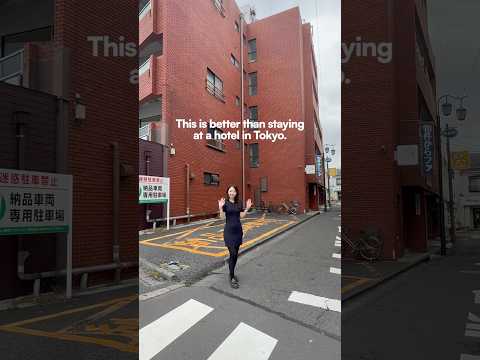
At E-Housing, we work with foreigners, expat families, international students and working professionals across greater Tokyo every day, and a large share of them arrive on exactly this path: a hotel for a week, a monthly rental for a month or two, then a proper lease once they know the city. We handle the whole sequence in English, Mandarin, Korean and Japanese, including the parts that are hard to do from overseas.
If you are working out where to land, tell us your dates, your budget and whether you need a registered address, and we will tell you honestly which of these options fits. Sometimes the answer is that you do not need us yet, and we will say so.
Final Verdict: Which Should You Actually Book?
The comparison as usually framed, Airbnb against hotel, has a clear answer under a month: hotels for short trips, Airbnb from around ten nights. What makes Japan different is that the framing is incomplete, because the third option is cheaper than both and structurally better suited to the stays most people are actually planning.
The thing to internalize is that Japan sorts accommodation by legal category rather than by price, and each category solves a different problem. Hotels solve certainty. Minpaku solve space and self-catering. Leases solve residence. Trying to make one do another's job is where the trouble starts, and it is why a three-month Airbnb feels like a mistake by week four and a monthly rental leaves you unable to enrol in health insurance.
The regulatory direction is also worth watching if you are planning ahead. Osaka has closed its special zone intake, Ota Ward has tightened its guidelines, and Tokyo will tax minpaku from April 2027. The short-let market in Japan is being narrowed rather than widened. Booking through a registered platform and checking for a licence number is not a formality, it is the thing that keeps your reservation from being one of the ones that quietly disappears.
FAQ: Airbnb, Hotels and Monthly Rentals in Japan
Is Airbnb legal in Japan?
Yes. Airbnb is a registered booking intermediary with the Japan Tourism Agency, and properties listed on it operate under either the minpaku law, the special zone scheme, or a Hotel Business Act licence. Unlicensed listings do exist, but a registered platform is required not to carry them.
Are Airbnbs illegal in Japan?
Legal ones are not. What is illegal is operating a lodging business without a registration, a certification or a licence, and the Japan Tourism Agency actively warns guests away from those properties on safety and hygiene grounds.
Does Japan have Airbnb?
Yes, and it is substantial. As of 15 July 2026 there were 42,070 active registered minpaku properties nationally, with Tokyo carrying more guest-nights than any other prefecture by a wide margin.
Are hotels or Airbnbs cheaper in Japan?
For stays under about a week, the difference is small and hotels often win once you account for cleaning fees. From roughly ten nights, Airbnb is usually cheaper. Past a month, a monthly rental beats both, typically by 30% to 60% per night.
Do Airbnbs in Japan need your passport?
Yes, if you do not have an address in Japan. The minpaku law requires hosts to record every guest's name, address, occupation and stay dates, plus nationality and passport number for foreign guests without a Japanese address.
How much is an Airbnb in Japan?
In Tokyo, short bookings commonly run ¥9,000 to ¥20,000 per night plus a cleaning fee, and bookings of 28 nights or more often drop to ¥6,000 to ¥12,000 per night after the monthly discount. Rates outside the major cities are considerably lower.
What is the 180-day rule for Airbnb in Japan?
A property registered under the minpaku law may host guests for a maximum of 180 nights per year, counted from noon on 1 April to noon on 1 April the following year. The quota attaches to the property, and local ordinances can reduce it further.
Can I stay in an Airbnb in Japan for three months?
Legally yes, but it is usually the wrong choice. You cannot register the address, the long-term cancellation policy makes leaving early expensive, and a monthly rental will normally cost less for the same period.
What is a monthly mansion in Japan?
A furnished apartment let on a fixed-term lease, usually from 30 days, with utilities, internet and appliances included in the price. No key money, no deposit in the traditional sense, and usually no Japanese guarantor required.
Can I register my address at a monthly mansion?
Often not. Most operators prohibit resident registration in their contract terms, though some allow it for stays of a year or more. Ask in writing about the specific unit before you book, because if you hold a mid- to long-term residence status you are required to register an address within 14 days.
What is the minimum stay for a monthly rental in Tokyo?
Typically 30 days, though some operators sell weekly blocks. Special zone minpaku have a statutory minimum of two nights and three days, which is a different product with different rules.
Is a share house cheaper than a monthly mansion?
Yes, substantially. Tokyo share houses commonly run ¥50,000 to ¥90,000 per month against ¥140,000 and up for a monthly mansion. You are trading a private apartment for a private room, and the trade is worth it for some people and not others.
Do I need a guarantor for a short-term rental in Japan?
Usually not. Because monthly rentals are prepaid, most operators skip income screening and the guarantor requirement. A standard two-year lease is a different matter and normally requires a guarantor company.
Will Tokyo's accommodation tax apply to Airbnb?
From 1 April 2027, yes. The tax base expands to include simple lodgings and both types of minpaku, at 3% of the nightly rate per person, with stays under ¥13,000 per person per night exempt.
How do I check whether a Japanese Airbnb listing is legal?
Look for a registration or licence number in the listing, check that a registration sign is displayed at the property, confirm the guest count is consistent with at least 3.3 square meters per person, and expect to be asked for identification at check-in.
What is the best option for my first month in Tokyo?
For most people arriving to work or study: a hotel for the first two or three nights near a major station, then a monthly rental while you search for a permanent apartment, with the address question resolved before you pay a deposit on either.
Share article
Get In Touch
Let’s Connect! How Can We Assist?
E-Housing connects you with quality properties across Tokyo. Whether you’re renting, buying or selling, our experts are ready to help. Fill out the form below for a response within 24 hours.