
September 10th, 2026
Rent
Guide
Monthly Apartments in Tokyo for Foreigners: 2026 Cost and Contract Guide
Last reviewed 2 Sep 2026 · 24 min read
There is a gap in Tokyo's housing market that almost nobody explains properly. On one side sits the hotel, which is easy to book and ruinous past about two weeks. On the other sits the standard two-year lease, which is cheap per month and asks you for a guarantor, a deposit, key money, a brokerage fee, a Japanese phone number and an inkan before it will let you through the door. Between them sits the monthly apartment.
A monthly apartment in Tokyo for foreigners is a furnished unit rented on a fixed-term contract, usually with a minimum stay of 30 days, with utilities and internet folded into one price and no guarantor required. You can book one from overseas with a passport. You can move in the day you land. For a three-month assignment, a language school term, or the eight weeks between arriving in Japan and signing a real lease, it is often the only option that actually works.
It is also more expensive than a normal apartment, and there is one thing it may quietly stop you doing that matters more than the price. This guide covers what monthly apartments in Tokyo cost, why the 30-day minimum exists, what a foreign resident can and cannot register at that address, and the point in a stay where a standard lease becomes the cheaper choice.
We have written this for people who are actually going to live in one, not for people comparing listings from a browser tab in another country. Some of what follows will talk you out of a monthly apartment. That is the point.
Japanese term マンスリーマンション (monthly mansion) Minimum stay Typically 30 days Typical 1K cost, 23 wards ~¥140,000 to ¥180,000 per month, all in Deposit and key money Normally none Guarantor Not required Brokerage fee Normally none Included Furniture, appliances, utilities, internet, linen in most cases Contract type Fixed-term lease (定期借家契約), no automatic renewal Best for Stays of one to six months, arrivals with no guarantor, people apartment hunting Not ideal for Stays over a year, families needing space, anyone who must register the address
Quick Answer: Is a Monthly Apartment in Tokyo Worth It?
For a stay between one and roughly six months, yes, almost always. You avoid a move-in package that routinely runs to four or five months' rent, you avoid buying a refrigerator you will abandon, and you avoid the guarantor screening that rejects a lot of newly arrived foreign residents. The premium you pay per month is real, but it is smaller than the money you save on the way in.
For a stay of a year or more, no. The monthly premium compounds, and somewhere between the twelfth and twentieth month it overtakes everything a standard lease charges you up front. We work through that arithmetic below with the assumptions written out, because the crossover point moves depending on how large your move-in package is and how much furniture you would have to buy.
There is a third case that has nothing to do with money. If your visa, your job or your family situation requires you to register your address at the ward office, a monthly apartment may not let you, and that single restriction can be a harder constraint than the rent. We cover it in detail further down, because it is the thing English-language coverage of this topic consistently leaves out.
What a Monthly Apartment in Tokyo Actually Is
The Japanese term is マンスリーマンション, monthly mansion, and "mansion" here just means a concrete apartment building rather than a wooden one. It carries no suggestion of grandeur. A monthly mansion in Tokyo is usually a 1R or 1K of somewhere between 18 and 25 square meters in an ordinary residential building, fitted out by an operator with a bed, a desk, a small refrigerator, a microwave, a washing machine and a television, then rented by the month.
What separates it from an ordinary rental is not the building. It is the contract and the bundle. The operator holds the lease or owns the unit, furnishes it, keeps the utilities in its own name, and sells you a single price that covers the room, the electricity, the gas, the water and the wifi. You bring a suitcase. That is genuinely all you bring.
The contract is a fixed-term lease, 定期借家契約, not the standard rolling tenancy most Japanese renters sign. A fixed-term lease ends on the date written into it and does not renew automatically. That cuts both ways. The landlord cannot be forced to extend, so a stay that runs long is not guaranteed, and you should assume nothing about extending until the operator confirms it in writing. In exchange, you are not locked into two years and there is no renewal fee.
If you want to understand exactly how a fixed-term contract differs from the standard Japanese tenancy before you sign anything, our guide to fixed-term versus standard rental agreements in Japan sets out what each one obliges you to.
Monthly Mansion, Serviced Apartment and Share House: The Words You Will See
Four terms get used interchangeably in English listings and they are not the same product.
A monthly mansion is the baseline: furnished, self-catering, no daily service, no reception desk, priced per day and billed per month. Nobody cleans it while you live there.
A serviced apartment is a monthly mansion with a hotel layer on top. Front desk, weekly housekeeping, sometimes a gym or a concierge. It costs considerably more, and the difference in Tokyo tends to be a factor rather than a margin.
A weekly mansion is the same product on a shorter clock, and the shorter clock changes its legal status. More on that in the next section.
A share house is a private bedroom in a building with shared kitchen and bathroom, usually the cheapest furnished option in Tokyo and usually the least private. Minimum stays are often one month, sometimes shorter.
When you search in English you will also hit "furnished apartment Tokyo" and "short-term rental Tokyo", which are marketing phrases rather than product categories. Read the contract length and the minimum stay, not the label.
Why Thirty Days Is the Magic Number
Nearly every monthly apartment in Tokyo has a 30-day minimum, and it looks arbitrary until you see the three separate rules stacked behind it. This is the part of the topic that English-language guides skip, and it explains most of the strange behavior you will encounter when booking.
The first rule is the Hotel Business Act. Renting rooms to people is either a lodging business, which needs a license, or a property rental business, which does not. The line between them was drawn by the health ministry in a 1988 circular that dealt with exactly this product. Tokyo's health authorities had asked whether "weekly mansions" counted as lodging, describing buildings with kitchens, refrigerators, bedding and no linen service, where guests handled their own cleaning. The ministry confirmed that they did, on two grounds: with turnover every one or two weeks, responsibility for the room's hygiene realistically sits with the operator rather than the guest, and a guest staying that briefly has no base of daily life there. Note that these Japanese government pages are published in Japanese only.
Stretch the stay past a month and both grounds weaken. The tenant is plainly living there, and the operator is plainly not cleaning. So an operator who wants to run an unlicensed building sets the minimum at 30 days and stays on the rental side of the line.
The second rule is consumption tax. Residential rent in Japan is exempt from consumption tax, which is why your Japanese friends never see 10% added to their rent. The National Tax Agency's guidance on housing leases sets out two exclusions from that exemption, and both bite here. A lease of under one month is taxable. So is any facility that falls under the Hotel Business Act, and the guidance names weekly mansions specifically, noting that they stay taxable even when the actual stay runs a month or longer.
That has a practical consequence for your quote. If your contract is 28 days, the whole thing is taxable. At 31 days it may not be. And the same guidance notes that utilities billed separately from rent are not part of the exempt rent, so an operator who lists electricity as a separate line item is adding tax to it. Ask whether the quoted figure is 税込 (tax included) before you compare two prices.
The third rule is the one people have actually heard of. Japan's Residential Accommodation Business Act, the minpaku law, lets a registered host rent out a home for short stays without a hotel license, but caps them at 180 nights per year. The Japan Tourism Agency counts that year from noon on 1 April to noon on the following 1 April, and counts a day as noon to noon. Hosts hit the cap. When they do, the listing disappears, and this is why a Tokyo Airbnb that looked available for your whole stay sometimes cannot take the second half of it.
Put the three together and the shape of the market makes sense. Under 30 nights, you are in hotel and minpaku territory, priced per night, taxed, and capped. From 30 nights, you are in rental territory, priced per month, often untaxed, and uncapped. The monthly apartment exists because that boundary exists.
What a Monthly Apartment in Tokyo Costs
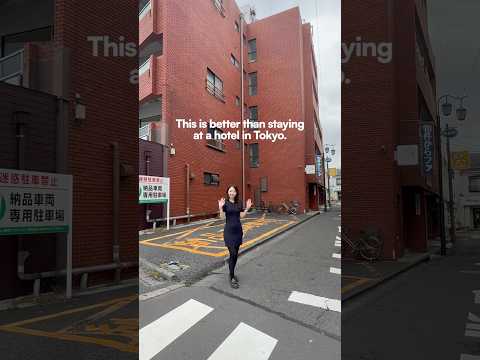
Current market pricing for a 1K or 1DK monthly apartment across Tokyo's 23 wards runs roughly ¥140,000 to ¥180,000 a month, all in. Central Tokyo stretches that band in both directions, with older studios in outer wards available for less and high-specification units in Minato or Shibuya running well past ¥300,000. Treat these as current market ranges rather than fixed ceilings, and expect them to move with the season: March and April are the worst months to book anything in Japan.
For context on what an unfurnished apartment costs, the government's most recent Housing and Land Survey put the average monthly rent for a rented home in Japan at ¥59,656 as of October 2023, up 7.1% on 2018, with non-wooden private rentals at ¥68,548. Those are national figures and Tokyo sits well above them, but the direction matters: rents are rising, and monthly apartment pricing has followed.
The gap between those two numbers is not all profit. A monthly apartment price is doing five jobs at once.
| What You Are Paying For | Included in a Monthly Apartment? | Typical Cost If You Bought It Separately |
|---|---|---|
| Rent | Yes | The base cost |
| Furniture and appliances | Yes | ¥150,000 to ¥300,000 for a basic set |
| Electricity, gas, water | Usually, sometimes capped | ¥10,000 to ¥18,000 a month for one person |
| Internet | Usually | ¥4,000 to ¥6,000 a month, plus installation |
| Deposit, key money, brokerage fee | Not charged | Three to five months' rent |
| Guarantor or guarantee company | Not required | 0.5 to 1 month's rent, plus annual renewal |
Figures for the right-hand column are current market ranges for Tokyo, given for comparison rather than as an official statistic.
The Line Items Operators Add On Top
The headline monthly price is rarely the whole invoice. Six charges show up often enough that you should ask about each one by name.
Cleaning fee: charged once, usually ¥20,000 to ¥40,000 for a studio, and normally payable at booking rather than at checkout. This is the standard extra and it is not negotiable.
Bedding rental: sometimes bundled, sometimes a separate ¥3,000 to ¥6,000 a month. If it is separate, the tax exemption on your rent does not cover it.
Utility caps: many operators include utilities up to a monthly ceiling and bill the excess. Run an air conditioner through a Tokyo August and you can clear a ¥10,000 cap without trying.
Parking, and it is expensive in Tokyo and almost never included.
Extension charges: extending a stay is often priced at a different rate from the original booking, and the shorter the extension the worse the rate.
Early departure: this is the one that catches people. Most operators do not refund the unused portion if you leave before the contracted end date. You are buying a block of time, not a rolling arrangement.
A Worked Example: Three Months in a 1K in Central Tokyo
Take a 1K monthly apartment at ¥160,000 a month, which sits in the middle of the current 23-ward band, booked for 92 nights from October.
| Item | Amount |
|---|---|
| Monthly charge, 3 months at ¥160,000 | ¥480,000 |
| One-off cleaning fee | ¥30,000 |
| Utility overage, estimated | ¥6,000 |
| Deposit | ¥0 |
| Key money | ¥0 |
| Brokerage fee | ¥0 |
| Guarantee company | ¥0 |
| Total for three months | ¥516,000 |
Illustrative, built on current market pricing for a mid-range 1K. Your quote will differ by ward, building age and season.
Roughly ¥172,000 a month, everything included, with nothing to buy and nothing to set up. Compare that with a hotel at even a modest ¥12,000 a night, which would run past ¥1,100,000 for the same period, and the case for the monthly apartment on a three-month stay is not close.
Monthly Rental vs a Standard Two-Year Lease: Where the Crossover Sits
Here is where the comparison gets interesting, and where you should be suspicious of the figures that circulate online. Japanese consumer coverage of monthly mansions often quotes a crossover of about seven months, meaning that past seven months a standard lease works out cheaper. That number is optimistic, because it usually leaves out furniture and treats the whole deposit as money gone.
Work it honestly. Take an unfurnished 1K in a mid-range Tokyo ward at ¥120,000 a month with an ¥8,000 management fee. The move-in package on a Japanese lease is the reason this comparison exists at all.
| Move-In Item | Typical Amount | Recoverable? |
|---|---|---|
| Security deposit (敷金), 1 month | ¥120,000 | Partly, at move-out |
| Key money (礼金), 1 month | ¥120,000 | No |
| Brokerage fee, 1 month plus tax | ¥132,000 | No |
| First month's rent and management fee | ¥128,000 | No |
| Guarantee company, 0.5 month | ¥60,000 | No |
| Fire insurance, 2 years | ¥20,000 | No |
| Key exchange | ¥16,500 | No |
| Furniture and appliances, basic set | ¥200,000 | Partly, if you resell |
| Total to walk through the door | ¥796,500 |
Illustrative package for a mid-range Tokyo 1K, built from current market practice. Deposit and key money vary widely; in greater Tokyo both currently average close to one month, and zero-deposit units are common at the lower end of the market.
Two of those line items are set by rules rather than by the landlord's mood. The brokerage fee is capped: under the notice issued beneath Article 46 of the Real Estate Brokerage Act, an agent may take no more than one month's rent in total from both parties combined on a residential lease, and no more than half a month from one party unless that party has agreed otherwise. Anyone quoting you more than one month plus consumption tax is quoting outside the rule.
The deposit is governed at move-out by Tokyo's own rules. The Metropolitan Government's rental dispute prevention guideline states the principle plainly: repair costs for wear from ordinary use and the passage of time are already covered by your rent and are the landlord's responsibility. Poster marks, carpet dents from furniture and sun-faded tatami are on the landlord. Cigarette burns and scratches from your own moving day are on you. Knowing that before you sign is worth real money at the end.
Now run the two side by side. The monthly apartment costs ¥190,000 in month one (¥160,000 plus the ¥30,000 cleaning fee) and ¥160,000 every month after. The standard lease costs ¥796,500 in month one and ¥128,000 every month after. The monthly apartment is ahead by ¥606,500 on day one and loses ¥32,000 of that lead every month.
That gives a crossover just under 20 months. Strip out the furniture, on the assumption you would sell most of it on, and it drops to about 14 months. Assume a landlord waiving key money and a free-rent campaign, both common in Tokyo's softer submarkets, and it can fall under a year.
So the honest answer is a range, not a number. Under six months, the monthly apartment wins comfortably. Between six and twelve months it depends entirely on the move-in package you can negotiate. Past eighteen months, a lease wins on almost any assumption you care to make. The seven-month figure you will see quoted is only right if you already own a refrigerator.
Before you compare a monthly quote against a lease, it helps to see the full list of what a Japanese landlord can charge you at signing. Our breakdown of the essential fees to budget for when renting an apartment in Japan covers every line, including the ones that are negotiable.
Renting a Monthly Apartment in Tokyo as a Foreign Resident
This is where the product earns its place, and it is worth being specific about why.
On a standard Japanese lease, a foreign applicant is screened by a guarantee company that assesses income, employment, visa status and, in practice, whether anyone at the company can communicate with you. Applications get rejected for reasons that have nothing to do with your ability to pay: no Japanese employment history, a visa expiring within the lease term, no emergency contact in Japan, or a landlord who has simply decided not to rent to non-Japanese tenants.
A monthly apartment removes most of that, and for one structural reason. You pay in advance. The operator has your money before you have the keys, so there is very little credit risk to underwrite, and the screening collapses to identity and intent.
What You Will Actually Be Asked For
In most cases: a passport copy, a residence card if you already have one, an emergency contact, and payment of the full contracted period up front. Some operators want the purpose of your stay in writing. Some want a flight number.
Two things still get applications refused. The first is a vague stay: an operator that cannot tell why you are coming or how long you are staying will decline rather than guess. The second is having no emergency contact inside Japan. If you are arriving with no network at all, ask your employer, your school or your agent whether they will act as the contact, because it is a common blocker and an easy one to solve in advance.
The Language Question
Contracts are executed in Japanese. Many of the larger operators run English-language booking sites and English support, but the binding document is usually the Japanese one, and some operators require either that you can communicate in Japanese or that you nominate someone who can. This is not a legal requirement. It is an operational preference, and it varies enormously between operators, which is a good reason not to take the first quote you find.
The Address Problem Nobody Warns You About
This is the most important section in this guide and the one most likely to change your decision.
If you hold a mid to long-term residence status in Japan, you are legally required to register your address. The Immigration Services Agency requires a notification of your residence address within 14 days of moving in, under Article 19-9 of the Immigration Control Act. Helpfully, that notification is satisfied automatically if you take your residence card to your local ward or city office and file the ordinary resident registration under the Basic Resident Registration Act. One trip covers both.
Separately, the Ministry of Internal Affairs and Communications is unambiguous that filing your address change is a legal obligation, not a courtesy, and that failing to do so without good reason can attract an administrative fine of up to ¥50,000. Your resident registration is what national health insurance, the pension system, child allowances and My Number are built on.
Now the problem. A large share of monthly apartment operators prohibit resident registration in the contract. The reason is not that the law forbids it. Resident registration follows where your actual base of daily life is, and if a monthly apartment genuinely is that base, that is where you belong on paper. The reason is commercial: operators run these units as short-stay inventory, do not want a chain of registered residents attached to an address, and in some cases hold the underlying lease on terms that do not permit it.
The consequences are not trivial. Without a registered address you may struggle to enroll in national health insurance, open a bank account at some institutions, get a mobile phone contract on standard terms, obtain a My Number card, or complete a driver's license conversion. For a six-week stay that is irrelevant. For a six-month stay on a work visa, it is a serious problem.
There are three ways through it. Ask before you book, in writing, and treat a vague answer as a no. Look for operators that explicitly permit registration, because they do exist and often advertise it as a feature. Or, if you are arriving on a longer stay, treat the monthly apartment as a genuinely temporary landing pad and plan to be into a registered address inside a couple of months.
If you are unclear on how Japanese address registration works, what the ward office needs and what breaks without it, our guide to registering or changing your address in Japan walks through the process step by step.
What Japanese Residents Complain About and Foreign Renters Rarely Mention
Read Japanese-language reviews and forum threads about monthly mansions and then read English-language coverage of the same product, and you get two different articles. The divergence is instructive.
English coverage is written almost entirely from the arrival side. It emphasizes no guarantor, no key money, fast move-in and English support, which are the four things that matter most when you are trying to solve the problem of getting into Tokyo at all. That coverage is accurate as far as it goes.
Japanese coverage is written from the residence side, by people already in the country choosing between a monthly mansion and a normal lease, and its complaints are almost entirely different. The recurring ones, in rough order of frequency: the cost crossover, which Japanese consumer writing treats as the central fact of the product rather than a footnote; the resident registration restriction, which appears in almost every Japanese guide and almost no English one; cleaning quality on arrival, with grubby shower curtains and stained fixtures a common enough complaint to be a genre; noise, because a lot of monthly stock sits in older buildings with thin walls and turnover neighbors who behave like they are in a hotel; and no refund on early departure.
None of these are secrets. They are simply the concerns of somebody who has already solved the getting-in problem and is now living in the room. If you are going to be in the room for more than a couple of months, they are your concerns too.
One more divergence worth naming. A number of Japanese-language operator pages assert that you cannot register your address at a monthly mansion because the law treats these buildings like hotels. That is not right, and repeating it obscures where the actual restriction comes from. Where registration is blocked, it is blocked by the contract you signed, which means it is a term you can ask about, shop around on, and sometimes negotiate. Do not accept "the law says no" as an answer.
Where Monthly Apartments Are in Tokyo, and Where They Are Not
Monthly stock is not spread evenly across the city. It clusters where short-stay demand clusters, which means around business districts, around major transport interchanges, and around the language schools and universities that generate a steady flow of one-term residents.
You will find the deepest supply in and around Shinjuku, Ikebukuro, Shibuya and the Yamanote loop generally, along the Chuo line corridor west of Shinjuku, in the office districts of Chiyoda and Chuo, and increasingly in the eastern wards where redevelopment has produced compact newer stock at lower prices than the center.
You will find very little in the quiet residential parts of Setagaya, Suginami and Nerima that make up most of Tokyo's actual housing, and almost nothing in the family-sized layouts. Monthly apartments are overwhelmingly a one-person product. A 2LDK or 3LDK on a monthly contract exists, but the supply is thin and the pricing reflects that.
If you are picking an area for a stay of a few months and want to think about it properly rather than just taking whatever is available, our guide to where to stay in Tokyo for one, three or six months compares neighborhoods and costs for exactly that length of stay.
Pros and Cons of Monthly Apartments in Tokyo
The advantages are concentrated at the start of the stay and the disadvantages accumulate over it. That is the shape of the whole product.
What works. No guarantor, which removes the single largest barrier facing foreign renters in Japan. No deposit, key money or brokerage fee, which removes three to five months' rent from your move-in cost. Furnished and connected on day one, so no appliance shopping and no waiting for an internet installation that in Tokyo can take three weeks. Bookable from overseas with a passport. One price, one invoice, no utility accounts to open or close. And a genuinely useful side benefit: it lets you live in a neighborhood before committing to two years in it.
What does not. The per-month cost is meaningfully higher than an equivalent unfurnished unit. Stock is dominated by small studios, so families and couples have few options. Address registration is often prohibited. Extension is not guaranteed, because a fixed-term contract ends when it says it does. Early departure usually forfeits the balance. Furnishing is functional rather than good, and you cannot change it. And older buildings with high turnover are noisier than a normal residential block.
Who Should Rent a Monthly Apartment, and Who Should Not
This should be a short section, because the answer is unusually clear.
Rent one if you are arriving in Tokyo for one to six months; you are between apartments and need somewhere while you search; you have no Japanese guarantor and no employer willing to act as one; you are here for a language school term or a single semester; your company is covering housing for a defined assignment; or you want to test a neighborhood before signing a two-year lease on it.
Do not rent one if you are staying more than a year, because the arithmetic turns against you and keeps going. Do not rent one if you need to register your address for health insurance, a bank account or a visa procedure and cannot find an operator that permits it. Do not rent one if you are moving with a family, because the stock is not there and what exists is priced brutally. Do not rent one if your dates are uncertain in the direction of leaving early, because you will pay for the whole booking anyway. And do not rent one if you care about the quality of the space you live in, because you are renting a functional box, not a home.
Monthly Apartment vs Hotel, Minpaku, Share House and a Standard Lease
Five options, each with a length of stay where it stops making sense.
| Option | Minimum Stay | Move-In Cost | Guarantor | Where It Stops Working |
|---|---|---|---|---|
| Hotel | 1 night | None | No | Past about 2 weeks, on cost |
| Minpaku (Airbnb) | 1 night | None | No | Host's 180-night annual cap |
| Monthly apartment | 30 days | Cleaning fee only | No | Past 12 to 18 months, on cost |
| Share house | 1 month | 1 month deposit typical | Usually no | When you need privacy |
| Standard lease | 2 years | 4 to 5 months' rent | Yes | If you can't clear screening |
The hotel is the right answer for under two weeks and the wrong answer for everything longer. Run the nightly rate you have actually been quoted against a monthly figure divided by thirty, and the point where the hotel stops being sensible usually arrives sooner than people expect.
Minpaku deserves a specific warning. The 180-night cap is annual and per property, so a host's availability calendar can look fine in January and close in November. If your stay crosses the cap, the booking does not survive it. For a stay of one month or more you are better off in a monthly contract that is not subject to the cap at all.
The share house is the genuine budget option and the honest comparison is not cost, it is privacy. If you can live with a shared kitchen and a shared bathroom, a share house in Tokyo will beat a monthly apartment on price by a wide margin. If you cannot, it will not matter what it costs.
How to Book One Without Getting Burned
Nine questions, asked before you pay, that between them prevent almost every problem in this article.
- Is the quoted price tax included, and is anything billed separately from the rent?
- Are utilities fully included, or included up to a monthly cap? If capped, at what figure?
- What is the one-off cleaning fee, and is anything else charged at checkout?
- Is bedding included in the price or rented separately?
- Can I register my address at this property? Ask for the answer in writing.
- What happens if I need to extend, and at what rate?
- What happens if I leave early, and is any portion refundable?
- What is the exact contract end date, and what notice do I owe?
- Is the building's internet included, and what speed?
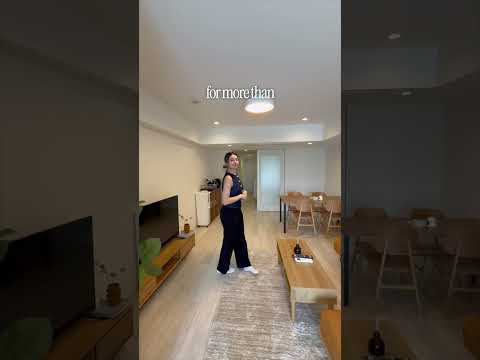
Two more things to do rather than ask. Look at the actual unit's photographs rather than the operator's model room, which is often a different apartment in a different building. And check the building's age. A lot of monthly stock sits in blocks built before Japan's 1981 earthquake standards, and for a stay of several months that is worth knowing.
Practical Advice from E-Housing
A few things we tell clients that do not appear on operator websites.
Book earlier than you think you need to for anything landing in March or April. Japan's moving season concentrates almost the entire country's relocations into six weeks, and monthly stock in Tokyo tightens accordingly, with prices to match. September and October are the easiest months to find something good.
Do not use a monthly apartment as your search base and then leave the search until month three. The best way to use one is to move in, register what you can, and start viewing normal apartments in week two, while your own timeline is still working for you rather than against you. Clients who treat the monthly apartment as the solution rather than the bridge tend to end up extending it at a worse rate.
Ask about the address registration question before you ask about the price. It is the constraint that is hardest to fix later, and it filters the operator list faster than any other question.
If you are on a work visa and your employer is paying, get the invoice arrangement agreed before booking. Corporate contracts on monthly apartments are common and often carry better rates than the consumer price, but they have to be set up at the start.
And if the stay is genuinely going to run past a year, come and talk to us about a normal lease instead. At E-Housing, we work with foreigners, expat families, international students and working professionals across greater Tokyo every day, which means we know which landlords will take a tenant with three months of Japanese employment history and which guarantee companies will approve which visa statuses. The screening barrier that pushes people into monthly apartments is often lower than it looks from outside, and a year in the right apartment costs less than a year in the wrong monthly one.
Final Verdict: Should You Rent a Monthly Apartment in Tokyo?
For a defined stay of one to six months, a monthly apartment in Tokyo is the correct answer and it is not particularly close. The premium you pay per month buys you out of a move-in package worth four or five months' rent, out of the guarantor screening, out of furnishing an apartment you will leave, and out of three weeks of waiting for the internet. For that use case the product is well designed and does what it claims.
What we would push back on is the way it gets sold as a general solution for foreigners in Japan. It is not. It is a bridge, and bridges are meant to be crossed. The two failure modes we see are people who stay on one for two years and pay a five- or six-figure yen premium for the privilege, and people who take one on a long-stay visa and discover in month four that they cannot enroll in health insurance because they never got an address registered.
Decide the length of the stay first, honestly, and then choose. Under six months, book the monthly apartment. Over a year, solve the lease problem instead, because it is more solvable than it looks. In between, do the arithmetic in this article with your own numbers, and pay particular attention to whether you can register at the address, because that is the constraint that money cannot fix.
FAQ: Monthly Apartments in Tokyo
How much is a monthly apartment in Tokyo?
Currently around ¥140,000 to ¥180,000 a month for a 1K or 1DK across Tokyo's 23 wards, including furniture, utilities and internet. Central wards and larger layouts run higher, and older studios in outer wards run lower.
Can foreigners rent a monthly apartment in Tokyo?
Yes. Most operators accept foreign tenants with a passport copy and payment in advance, and no Japanese guarantor is required. The usual reasons for refusal are an unclear purpose of stay or no emergency contact inside Japan.
Do you need a guarantor for a monthly apartment in Japan?
No. Because the full contracted period is paid up front, there is almost no credit risk for the operator to underwrite, so guarantors and guarantee companies are not part of the process.
What is a monthly mansion in Japan?
マンスリーマンション is the Japanese term for a furnished apartment rented by the month on a fixed-term contract, typically with a 30-day minimum and with utilities and internet included in one price. "Mansion" means a concrete apartment building, not a large house.
Why do monthly apartments in Tokyo have a 30-day minimum?
Because under 30 days the operator generally falls under the Hotel Business Act and needs a license, and a lease of under one month also loses the consumption tax exemption that applies to residential rent. Setting the minimum at 30 days keeps the arrangement on the rental side of both rules.
Can I register my address at a monthly apartment in Tokyo?
Often not. The restriction is contractual rather than legal, so it varies by operator, and some permit registration. Ask in writing before booking, because without a registered address you may not be able to enroll in national health insurance or complete other resident procedures.
Is a monthly apartment cheaper than a hotel in Tokyo?
For any stay of a month or more, yes, and usually by a wide margin. A ¥160,000 monthly apartment works out at roughly ¥5,300 a night with utilities and internet included, which no Tokyo hotel currently matches.
How long do you have to stay in a monthly apartment in Tokyo?
Minimums are usually 30 days, though a few operators go shorter at a higher nightly rate. There is no legal maximum, but fixed-term contracts do not renew automatically, so an extension has to be agreed with the operator.
Are utilities included in a monthly apartment in Tokyo?
Usually, though many operators include them only up to a monthly cap and bill the excess. Ask what the cap is, because heavy air conditioning use through a Tokyo summer can exceed a typical ¥10,000 ceiling.
Do monthly apartments in Tokyo come furnished?
Yes. Bed, desk, refrigerator, microwave, washing machine, television and wifi are standard. Bedding is sometimes included and sometimes rented separately, so check which.
Can I get a refund if I leave a monthly apartment early?
Usually not. Most operators treat the contracted period as paid in full regardless of when you actually vacate, so book the shortest period you are confident about and extend rather than the reverse.
What is the difference between a monthly apartment and a serviced apartment in Tokyo?
A serviced apartment adds hotel-style services on top: a front desk, regular housekeeping and often shared facilities. It costs considerably more. A monthly apartment is self-catering with no service during the stay.
Is it cheaper to rent monthly or sign a lease in Tokyo?
Under six months, monthly is clearly cheaper once move-in costs and furniture are counted. Past roughly twelve to eighteen months a standard lease wins, with the exact crossover depending on the size of the move-in package and whether you would have to furnish the place.
Can I bring a family to a monthly apartment in Tokyo?
Rarely a good idea. The stock is overwhelmingly studios and one-room units built for single occupancy, and the few family-sized monthly units in Tokyo are priced at a steep premium.
Do I need a Japanese phone number or bank account to book a monthly apartment?
Usually not for the booking itself, since payment is typically by international transfer or card and correspondence is by email. You will want both fairly quickly after arrival for everything else, which is one more reason to check the address registration position early.
Share article
Get In Touch
Let’s Connect! How Can We Assist?
E-Housing connects you with quality properties across Tokyo. Whether you’re renting, buying or selling, our experts are ready to help. Fill out the form below for a response within 24 hours.